

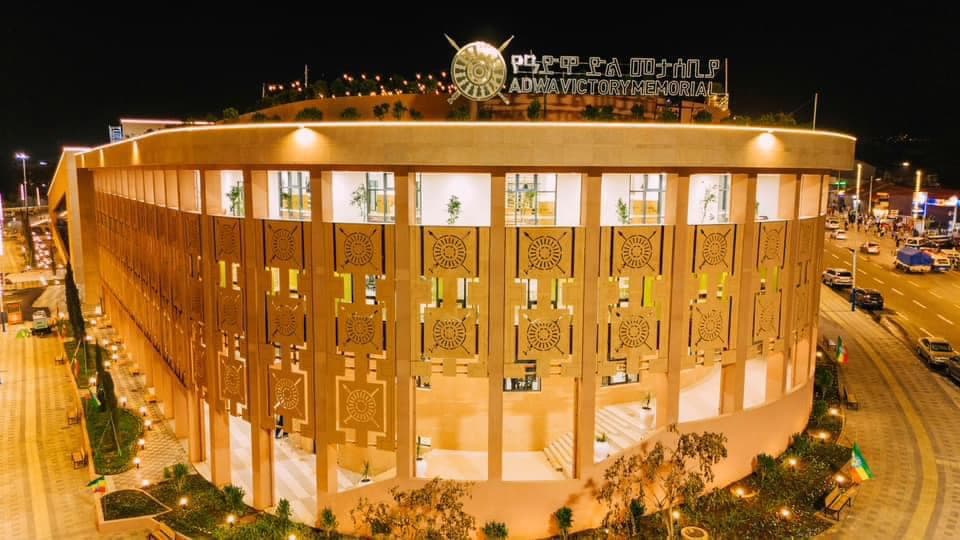
Ethiopia is the oldest independent country in Africa and one of the oldest in the world. The oldest remains of a human ancestor ever found, which have been dated as being some five million years old, were discovered in the Awash Valley in Ethiopia. This puts Ethiopia among the earliest known locations of human presence. Ethiopia is also the first African nation to defeat a European colonial power, at the Battle of Adwa in 1896.
The Greek historian Herodotus, of the fifth century BC, describes ancient Ethiopia in his writings, while the Bible’s Old Testament records the Queen of Sheba’s visit to Jerusalem where “she proved Solomon with hard questions”.
The remains of Queen of Sheba’s palace can still be seen today in Axum, in the province of Tigray, northern Ethiopia. Axum is also home to many other extensive historical sites.
From the 1700s, for roughly 100 years, there was no central power in Ethiopia. This “Era of the Princes” was characterized by the turmoil caused by local rulers competing against each other for power.
Emperor Menelik II reigned from 1889 to 1913, fending off the encroachment of European powers. Italy posed the greatest threat, having begun to colonize Ethiopia. In 1896 Ethiopia defeated Italy at the Battle of Adwa — a defining moment of African resistance to colonialism.
In 1916, the Christian nobility deposed the sitting king, Lij Iyassu and made his predecessor’s, King Menelik II (1889 – 1913), daughter Zewditu, Empress and her cousin, Ras Tafari Makonnen (1892-1975), Regent.
Zewditu died in 1930, after which the regent – adopting the name Haileselassie – became Emperor. His reign was interrupted in 1936 when Italian forces briefly invaded and occupied Ethiopia. Haileselassie was restored with Allied support in 1941.
Haileselassie then reigned until 1974 when he was deposed and a provisional council of soldiers (the Derg, meaning committee) seized power and installed a government which was socialist in name and military in character.
In 1991 Ethiopian Peoples Revolutionary Democratic Front overthrew the Derg and the Transitional Government of Ethiopia (TGE) was set up by the EPRDF and other political parties in the country and a transitional period began.
The Multiparty system was installed in Ethiopia and an election for a 548-member constituent assembly was held in June 1994. This assembly adopted the constitution of the Federal Democratic Republic of Ethiopia.
In 1994, a new constitution was written that formed a bicameral legislature and a judicial system. A general election was held in 1995 to elect the Parliament which also elected Meles Zenawi as Prime Minister.
Following the death of Prime Minister Meles Zenawi in August 2012, Hailemariam Desalegn succeeded him as Prime Minister of the Federal Democratic Republic of Ethiopia and Chairman of the ruling coalition.
Following popular uprisings seeking changes in leadership and reform of the ruling EPRDF coalition, Abiy Ahmed (PhD) was declared Prime Minister on 2 April 2018. The Parliament also appointed Sahle-Work Zewde as President.
Prime Minister Abiy further expanded his effort to bring peace in the region and brought to an end the 20 years stalemate with Eritrea and signing a peace agreement. He was later awarded the 2019 Nobel Peace Prize.
In conclusion, Ethiopia is Africa’s oldest independent country and one of the fastest growing economies, the second most populous country in Africa with a population of over 120 million.
Since Prime Minister Abiy Ahmed came to power, the government introduced a home-grown economic reform and growth policy at the centre of which is private ownership through privatization of state-owned enterprises and opening key sectors of the economy to foreign investment.